PPF vs Ceramic Coating: What Each Actually Does — and Why Some Cars Need Both
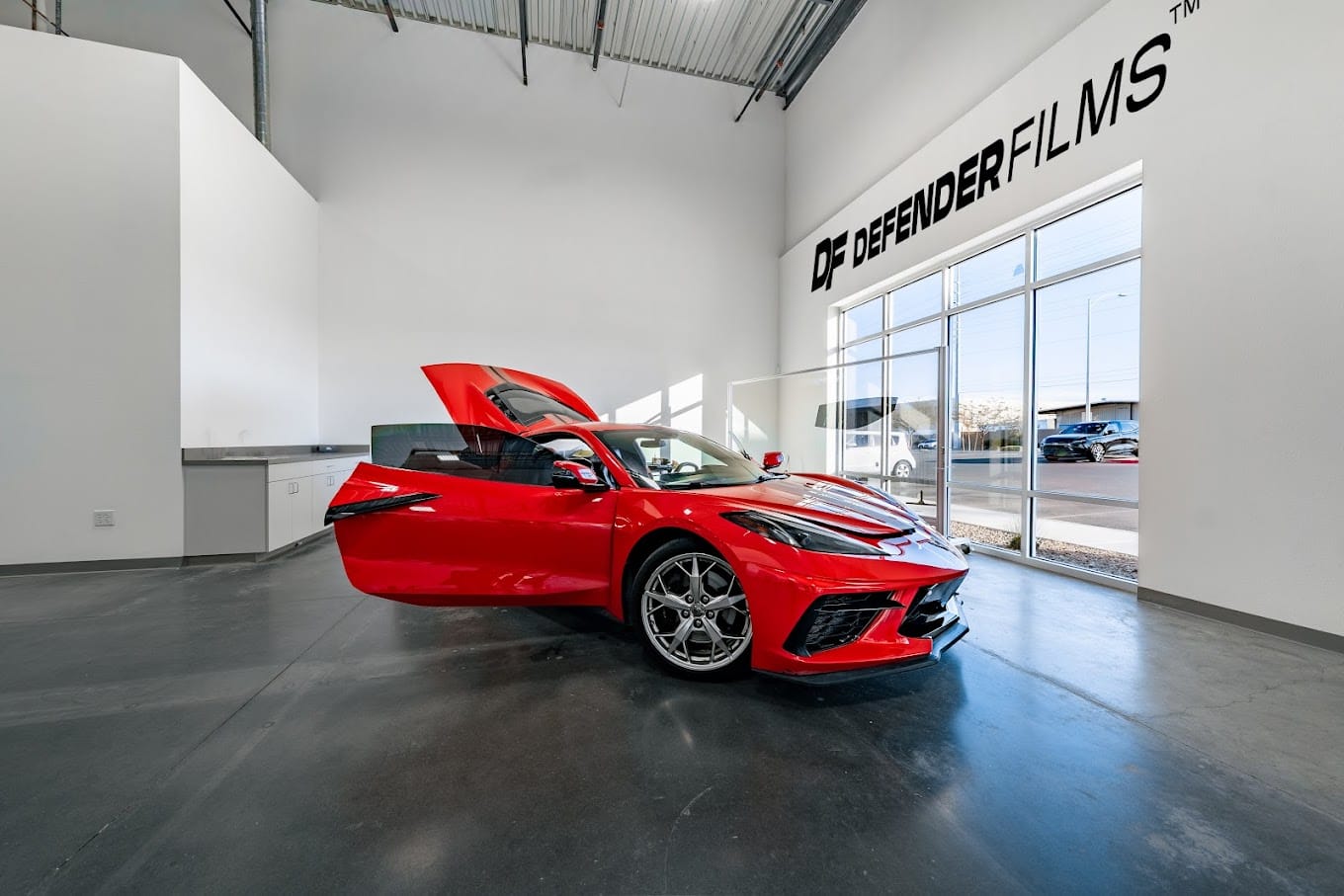
Two Completely Different Threat Profiles
Paint protection film is a physical barrier. It is a thick, flexible urethane layer bonded to your paint that absorbs impact energy — rock chips, road debris, door dings, and minor abrasions. The film takes the damage so the paint does not. Think of it as armor.
Ceramic coating is a chemical bond to your clear coat. It does not absorb impact. A rock chip at highway speed will go straight through a ceramic coating into your paint. What ceramic coating does is create a hydrophobic, chemically resistant, UV-blocking surface that prevents oxidation, chemical etching, water spot bonding, and contamination adhesion. Think of it as a hardened sealed surface.
What PPF Protects Against
XPEL ULTIMATE PLUS film handles rock chips, gravel strikes, and road debris impact at speed. It absorbs the energy of small-to-medium projectiles before they reach your paint. It resists light scratches and swirl marks, and the self-healing top coat can recover minor surface damage under heat. It also blocks UV at the film surface level, adding another layer of protection against sun-driven paint oxidation.
PPF does not make your car easier to wash. It is not particularly hydrophobic on its own. Contamination can still bond to the film surface. Without a coating on top, water spots from hard Las Vegas water — which has very high mineral content — can etch the film surface over time.
What Ceramic Coating Protects Against
A properly applied ceramic coating creates a surface with a contact angle above 100 degrees for water — meaning water beads and sheets off rather than sitting and bonding. In Las Vegas, where water has high calcium and magnesium content, this hydrophobicity dramatically reduces water spot formation. The same property makes the surface resistant to brake dust, road grime, bird droppings, and bug acids.
Ceramic coatings also provide meaningful UV blocking at the clear coat surface, which is the first layer to show oxidation and fading in desert climates. The hardness of a quality ceramic — measured in pencil hardness, typically 9H for professional-grade coatings — adds minor scratch resistance, though it will not stop a rock chip.
The Best-Protected Cars in Las Vegas Have Both
The premium setup is XPEL ULTIMATE PLUS film on impact-vulnerable surfaces followed by a professional ceramic coating over the top of the film and the remaining painted surfaces. The film handles physical impact; the ceramic handles contamination, UV, and water. Maintenance is dramatically reduced because the ceramic makes the film surface easy to clean. The film protects the ceramic from chipping at the front end.
This combination is what we see on serious collector cars, daily-driven exotics, and new luxury vehicles where owners intend to maintain value and minimize maintenance. Call 725-303-1595 to get a quote for your vehicle.
Protect your car the right way.
Book a free consult and we'll recommend the right mix of tint, PPF, and ceramic for your vehicle — and quote it exactly.
Keep reading.
Is Paint Protection Film Worth It in Las Vegas? A Straight Answer
Paint protection film costs real money. Whether it's worth it depends on your vehicle, your routes, and how much paint damage actually costs you. Here's the honest math.
Full-Body PPF vs Partial-Front Coverage: Which One Is Right for Your Car?
Most paint damage on a Las Vegas vehicle happens on the front end. Knowing where the film delivers the most value helps you make a smarter investment decision.
How Self-Healing PPF Actually Works — and What It Can and Cannot Fix
The self-healing claim sounds like marketing. The mechanism behind it is actual polymer science. Here's how it works and what it means for your car in Las Vegas.