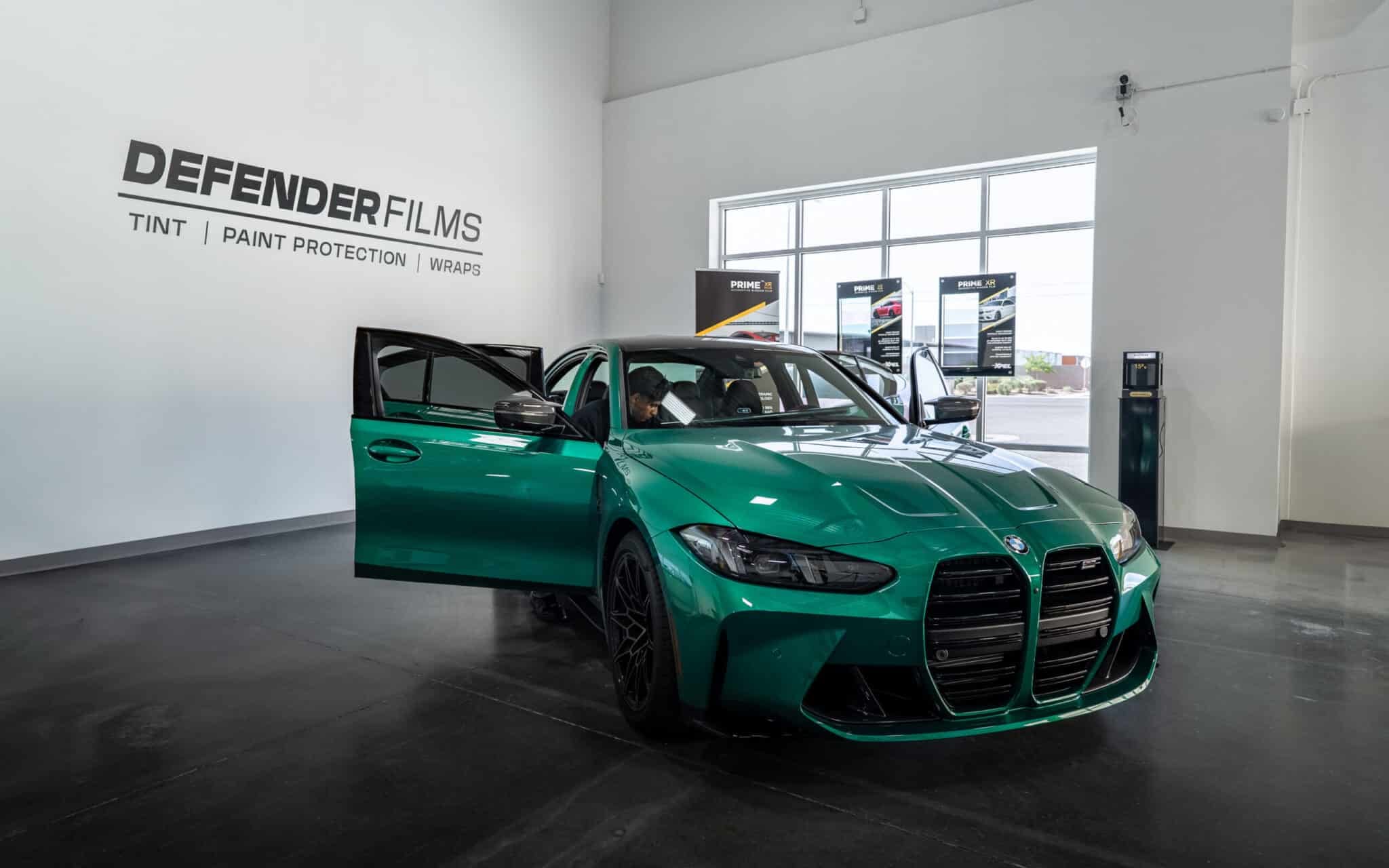
The Elastomeric Top Coat Explained
XPEL ULTIMATE PLUS has a multi-layer construction. The main body of the film is a urethane layer — thick, flexible, and impact-resistant. On top of that sits an elastomeric clear coat with memory properties. Elastomeric means the material can deform under stress and return to its original shape when the stress is removed and heat is introduced.
When the film surface is scratched lightly — by a wash mitt, a cloth rubbed under pressure, fingernails, or fine grit — the top coat deforms. The molecular chains in the elastomer are pushed out of alignment. When heat is applied, those chains relax and return to their pre-deformation orientation. The scratch effectively disappears.
How Much Heat It Takes — and What That Means in Las Vegas
The healing temperature threshold for XPEL ULTIMATE PLUS is approximately 140 to 160 degrees Fahrenheit. At that temperature, the molecular chains in the elastomeric top coat have enough thermal energy to rearrange. In Las Vegas summer conditions, the surface of a black or dark-colored vehicle sitting in direct sunlight can reach 180 to 200 degrees Fahrenheit. Most swirl marks and light surface scratches heal on their own within a few hours of sun exposure.
For lighter-colored vehicles or in milder seasons, a heat gun or a bucket of warm water poured over the affected area can trigger the same healing process in minutes. We demonstrate this at the shop when we deliver freshly filmed vehicles — customers are typically skeptical until they watch it happen.
What Self-Healing Cannot Recover
A scratch that penetrates fully through the elastomeric top coat and into the urethane body of the film does not heal. The mechanism requires the top coat to be intact — the elastomeric chains can realign, but missing material cannot be regenerated. Deep scratches from a key, a sharp edge, or aggressive abrasive compounds can exceed the film's self-healing capability.
Rock chips do not heal either. A rock chip is a high-velocity impact that removes film material from the impact point. The film around the chip may have a clean edge due to the elastomeric properties, but the impact void remains. What the film has done is confined the damage to itself rather than allowing it to reach your paint — which is its primary job.
How Long the Self-Healing Property Lasts
XPEL backs ULTIMATE PLUS with a 10-year manufacturer warranty that covers yellowing, cracking, bubbling, and delamination. The self-healing property is inherent to the elastomeric top coat and does not diminish significantly with age under normal use conditions. A film installed correctly and maintained properly will self-heal just as effectively in year eight as in year one.
Proper maintenance means washing with pH-neutral products, avoiding aggressive abrasive polishes on the film surface, and not using solvent-based chemicals on or near the film edges. Defender Films walks every customer through a maintenance guide at delivery. Call 725-303-1595 to schedule your install.
Protect your car the right way.
Book a free consult and we'll recommend the right mix of tint, PPF, and ceramic for your vehicle — and quote it exactly.
Keep reading.
Is Paint Protection Film Worth It in Las Vegas? A Straight Answer
Paint protection film costs real money. Whether it's worth it depends on your vehicle, your routes, and how much paint damage actually costs you. Here's the honest math.
Full-Body PPF vs Partial-Front Coverage: Which One Is Right for Your Car?
Most paint damage on a Las Vegas vehicle happens on the front end. Knowing where the film delivers the most value helps you make a smarter investment decision.
PPF vs Ceramic Coating: What Each Actually Does — and Why Some Cars Need Both
Customers ask whether they need PPF or ceramic coating. The real answer is that they protect against completely different threats. Here's how each works and why the best setups use both.