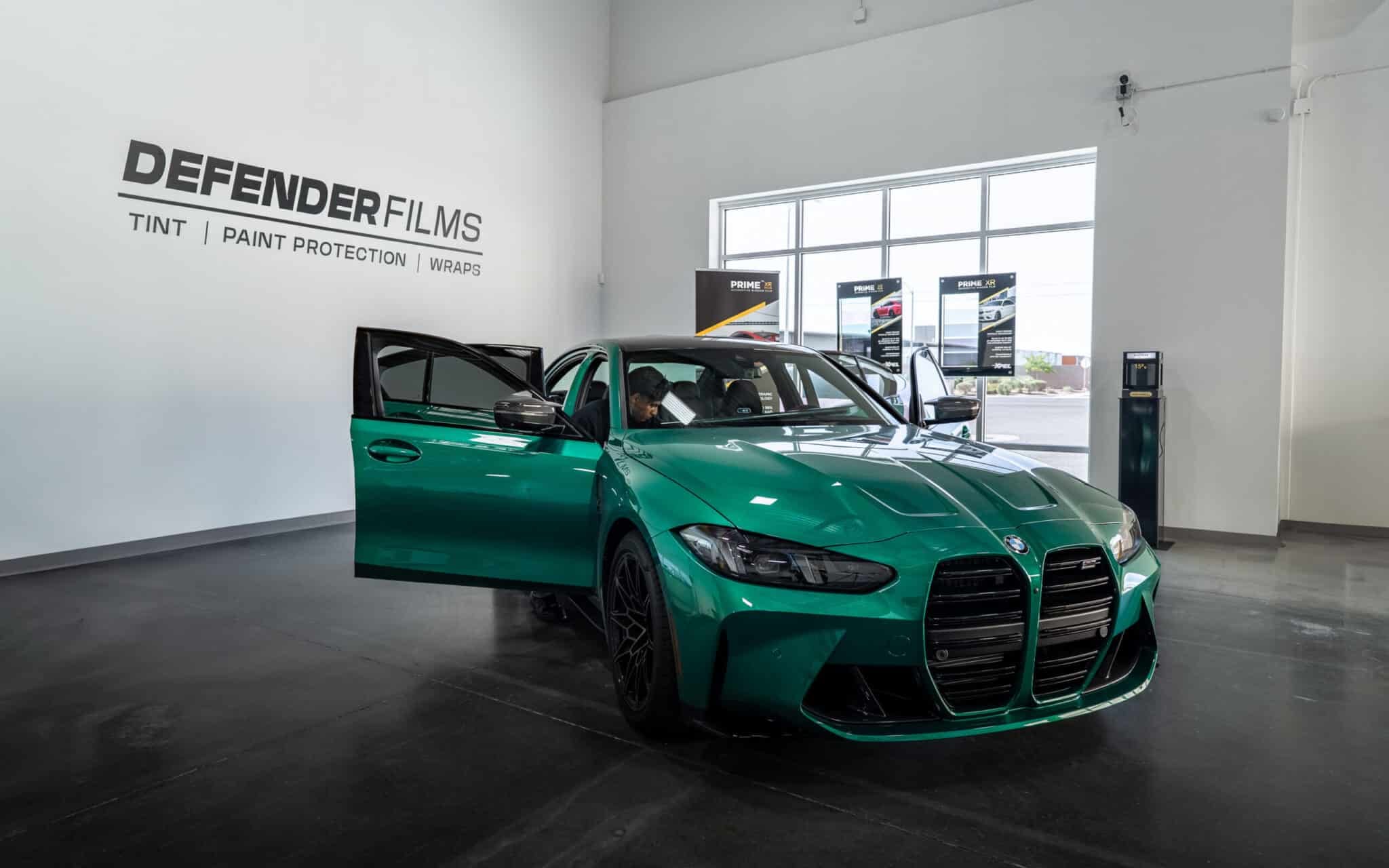
How a Hot Cabin Forces Your AC to Work Harder
When your car sits in a Las Vegas parking lot in August, the interior can reach 150 to 170 degrees Fahrenheit within 20 minutes. When you return and start the engine, your AC compressor runs at maximum capacity to pull that heat out of the cabin, the seats, the dashboard, and the headliner. That sustained maximum-load operation consumes a significant amount of engine power, which translates directly to increased fuel consumption — or reduced range in an EV.
The compressor cycle length and duty cycle both decrease as cabin temperature drops to a manageable range. Every degree of pre-conditioning you can eliminate through passive heat rejection — like window film — shortens the maximum-load run time and reduces the total energy the AC system consumes over a drive.
What the IR Rejection Numbers Mean in Practice
Infrared radiation is the primary heat carrier in sunlight. Visible light is bright but relatively low in heat energy. It is the near-infrared portion of the spectrum — which you cannot see but can feel immediately — that accounts for the bulk of solar heat load in a vehicle. A film that blocks 50 percent of infrared while blocking 70 percent of visible light is not performing as well as a film that blocks 85 percent of infrared at the same visible shade.
XPEL PRIME XR Plus, which we install as a certified XPEL dealer, rejects up to 88 percent of infrared radiation. Under test conditions, that level of IR rejection can reduce peak cabin temperature by 20 to 30 degrees Fahrenheit compared to an untreated vehicle. On a day when outside ambient is 110 degrees, a 30-degree cabin reduction means the difference between climbing into a 160-degree car and a 130-degree car — which is still hot, but requires far less AC run time to reach comfort.
EV Range and Tint: An Underappreciated Benefit
The AC system on an electric vehicle draws directly from the battery pack. In hot climates, AC consumption can reduce real-world EV range by 20 to 40 percent depending on the vehicle and conditions. Tesla, Rivian, and other EV owners in Las Vegas already know this — range anxiety is worse in summer than in winter for most desert-climate EVs.
Ceramic window tint reduces the thermal load the AC must manage, which extends the range window by reducing compressor duty cycle. The effect is not enormous — you are not adding 50 miles of range — but on a vehicle where thermal management already stresses the battery in July, reducing the AC load at the source has compounding effects over the life of the vehicle.
The Honest Bottom Line
High-quality ceramic tint will not pay for itself in fuel savings alone in a typical 12-month window. The comfort benefit is real and immediate. The AC load reduction is real and measurable. The fuel savings are genuine but incremental — think reduced wear on the AC compressor and marginally better MPG over thousands of miles, not a dramatic weekly change at the pump.
The value equation for Las Vegas drivers is heat rejection plus UV protection plus privacy plus fuel efficiency, not fuel efficiency alone. Call 725-303-1595 or visit us at 6738 W Sunset Rd Suite 100 to talk through the options.
Protect your car the right way.
Book a free consult and we'll recommend the right mix of tint, PPF, and ceramic for your vehicle — and quote it exactly.
Keep reading.
Nevada Window Tint Law: What Las Vegas Drivers Need to Know
Tint laws catch drivers off guard in Nevada. Here's a plain-English breakdown of what's regulated, what's not, and how Defender Films keeps every install compliant.
Ceramic vs Carbon Tint: Which One Actually Wins in Las Vegas Heat
Not all window tint is the same film. Carbon and ceramic tints perform very differently in extreme desert heat — and the difference shows up every time you open your car door in July.
Window Tint Cure Time and Aftercare: What to Expect After Your Install
The first 72 hours after a window tint install are critical. Understanding what's normal — and what to avoid — protects your investment from day one.