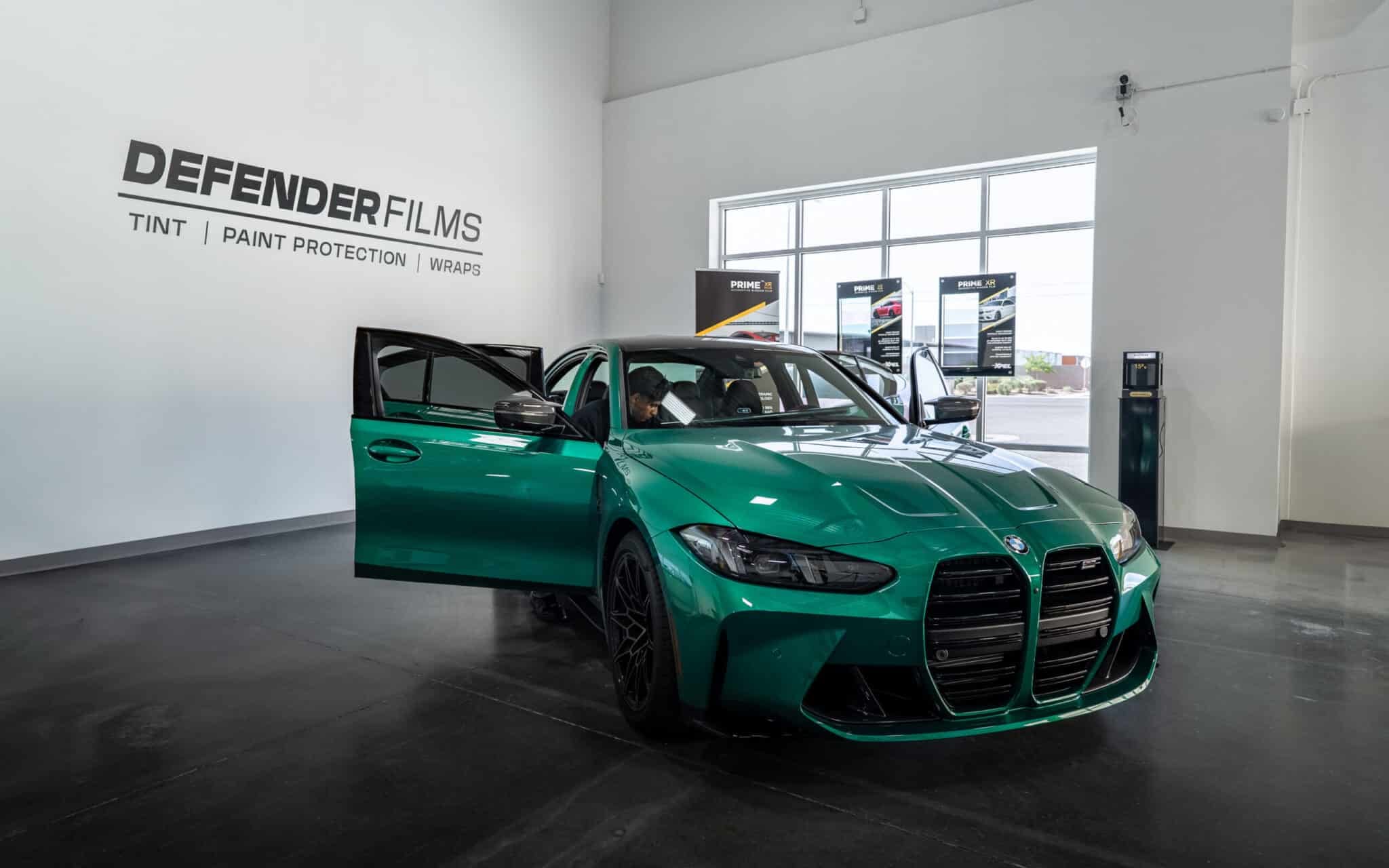
Why Tint Law Matters in Las Vegas
Nevada law sets limits on how much visible light must pass through your front side windows and windshield. Those limits exist for officer safety during traffic stops — the idea being that an officer needs to see into a vehicle. The rear side windows and back glass on most passenger vehicles have much more latitude.
The problem for Las Vegas drivers is that the desert sun makes you want to go as dark as possible on every piece of glass. That instinct is understandable — interior temps can spike past 160 degrees Fahrenheit when a car sits in a parking lot in July. But front-window tint that crosses the legal threshold can earn you a fix-it ticket and a required removal, which means paying twice.
Front Windows, Windshield, and Rear Glass — Different Rules
Nevada does not treat all windows equally. The front driver and passenger windows face the strictest VLT requirements. The windshield allows a non-reflective tint strip along the top portion only — commonly called a visor strip — that does not interfere with the driver's view. Rear side windows and the rear windshield on sedans and SUVs allow darker films, though specific limits still apply.
VLT stands for Visible Light Transmission — the percentage of light the film allows through. A lower number means a darker tint. Because the regulations can change and enforcement varies by jurisdiction, we recommend every customer book a quick consult before choosing their shade. We know exactly what passes inspection in Clark County and we will not install anything that puts your registration at risk.
Medical Exemptions Are Real — and Limited
Nevada does offer a medical exemption process for drivers with documented conditions that require reduced sun exposure, such as lupus or certain post-surgical sensitivities. The exemption allows darker front-window film. You will need documentation from a licensed physician, and the exemption is not a blank check — there are still upper limits and the certificate must be carried in the vehicle.
If you believe you qualify, bring your paperwork when you visit. We have processed exemption installs before and we know exactly how to document the job so your records are clean.
How Defender Films Keeps You Compliant
Every Defender Films installer uses a calibrated light meter at the end of every window tint job. We measure actual VLT through the combined glass-and-film stack before the car leaves our bay. Factory glass already absorbs some light — the darker your OEM glass, the less additional film you can add before hitting the legal threshold. We account for that upfront, not after the fact.
We have been doing this in Las Vegas since 2009 and have handled more than 8,000 vehicles. Compliance is not an afterthought for us — it is part of the quote conversation. Call 725-303-1595 or stop by 6738 W Sunset Rd Suite 100 and we will walk you through exactly what works on your specific vehicle.
Protect your car the right way.
Book a free consult and we'll recommend the right mix of tint, PPF, and ceramic for your vehicle — and quote it exactly.
Keep reading.
Ceramic vs Carbon Tint: Which One Actually Wins in Las Vegas Heat
Not all window tint is the same film. Carbon and ceramic tints perform very differently in extreme desert heat — and the difference shows up every time you open your car door in July.
Window Tint Cure Time and Aftercare: What to Expect After Your Install
The first 72 hours after a window tint install are critical. Understanding what's normal — and what to avoid — protects your investment from day one.
Best Window Tint Shade for the Las Vegas Desert: How to Choose
Picking a tint shade involves more than going as dark as possible. Here's how to balance heat rejection, visibility, legal compliance, and daily driving comfort in the desert.