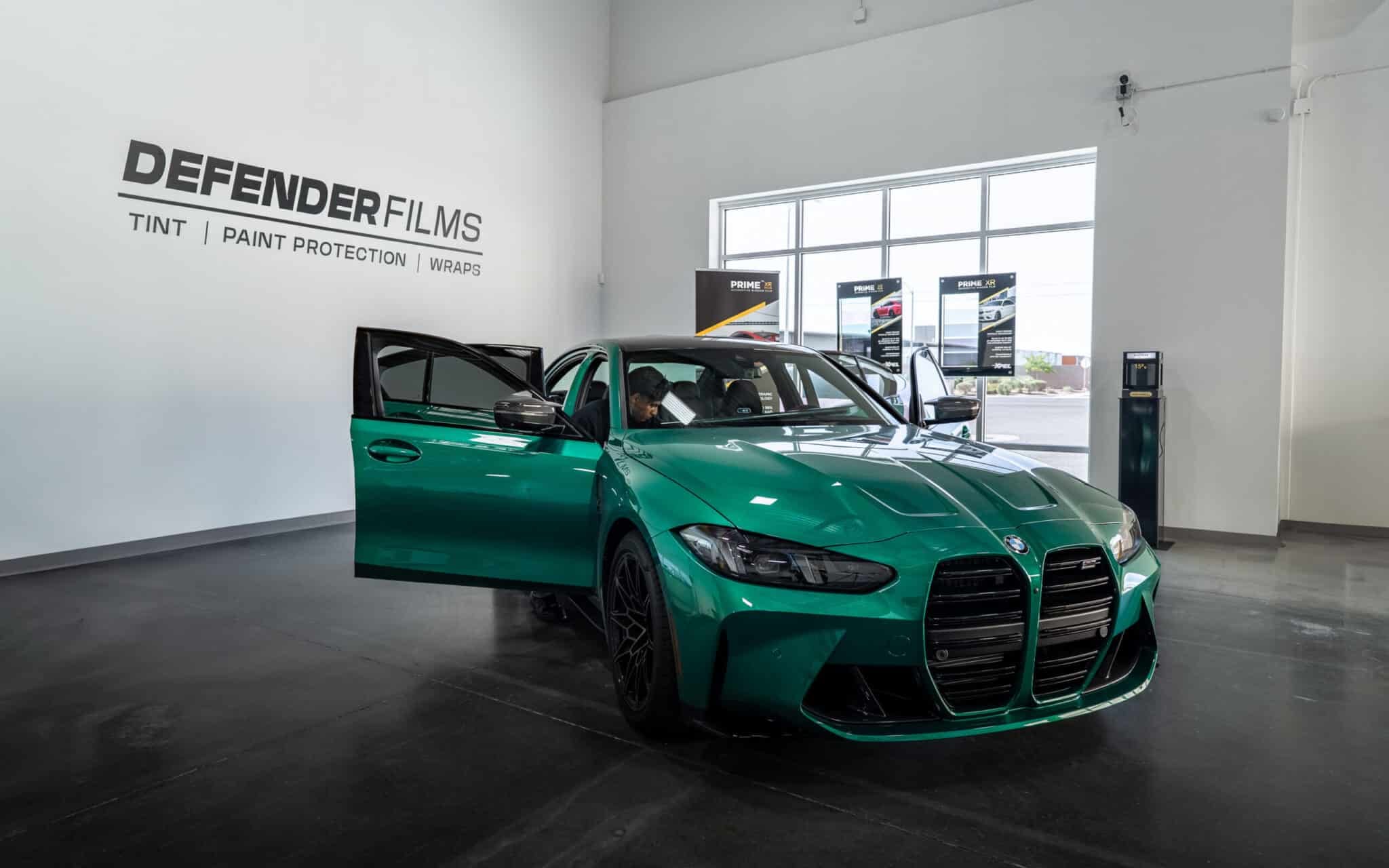
Why the Best Protection Requires All Three
Ceramic window tint handles the heat, UV, and glare entering through the glass. PPF handles physical impact to the paint. Ceramic coating handles contamination, chemical etching, water spots, and UV on painted surfaces. Each layer addresses a threat the other two do not. Running only one or two of these means one or more major damage vectors is left open.
The analogy that works: tint is your shield against the sun coming through the glass, PPF is your armor against rocks and debris hitting the paint, and ceramic is your surface hardening against everything that lands on the car and sticks or etches. Together they create a vehicle that handles everything Las Vegas throws at it.
The Correct Installation Sequence
Order matters. Paint correction and decontamination comes first, before anything else is applied. Then PPF goes on impact zones — front bumper, hood, fenders, A-pillars, mirrors. Then ceramic coating goes on the filmed surfaces and the remaining painted surfaces. Window tint goes on last, or can be done concurrently with the interior while exterior work is completed.
Applying ceramic before PPF means the film adhesive bonds to the cured ceramic rather than directly to the paint — which reduces film adhesion and can cause premature edge lifting. Applying PPF without paint correction means any existing swirls or contamination are sealed under the film for the life of the install. Sequence is not a detail — it determines the quality of the final result.
What Each Layer Costs and What It Buys
Ceramic window tint on a sedan or SUV at Defender Films runs in a range that depends on vehicle size, film grade, and the number of windows. It is the lowest entry point of the three and delivers immediate, measurable daily comfort improvements — cooler cabin, lower AC load, UV protection for occupants and interior.
PPF on a partial-front package is the next investment tier. It protects the surfaces where Las Vegas roads do the most damage and extends the useful life of your paint on high-impact panels. Ceramic coating on a full vehicle, applied over the film and remaining paint, is typically the third and highest investment — and the one that reduces ongoing maintenance most dramatically.
The Maintenance Advantage of the Full Stack
A vehicle with all three protections in place is significantly easier to maintain than an unprotected vehicle. The ceramic coating makes washing easier and more effective — contamination does not bond the way it does to bare clear coat. The PPF means you are not spending time touching up chips and finding matching paint. The window tint means the interior you are cleaning stays in better condition because UV is not degrading the materials.
Most customers who complete the full stack report that their car care routine becomes simpler, not more complex. Less frequent washing needed, fewer products required, and fewer repairs to schedule.
Planning Your Stack: Where to Start
If budget requires phasing, start with the installation that addresses your most immediate pain point. If your car parks outdoors and your interior is getting hot and faded — start with ceramic tint. If you are accumulating chips on a vehicle you plan to keep or sell in a few years — start with PPF on the front end. If you want to stop spending time washing and stop seeing water spots after every rain — start with ceramic coating.
The full stack can be done in phases over 12 to 24 months. Each phase adds value independently. Come in for a free consultation at 6738 W Sunset Rd Suite 100 or call 725-303-1595 and we will help you build the right plan for your vehicle and your budget.
Protect your car the right way.
Book a free consult and we'll recommend the right mix of tint, PPF, and ceramic for your vehicle — and quote it exactly.
Keep reading.
How to Protect a Brand-New Car Before Las Vegas Roads Touch It
The best time to apply PPF and ceramic coating is before the first scratch. Here's what the smart new-car protocol looks like for Las Vegas conditions.
Protecting a Leased Car Before Turn-In: What to Do Now to Avoid Fees
A lease return inspection penalizes paint chips, scratches, and UV-damaged interiors. Protecting the car now is almost always less expensive than paying the damage fees at turn-in.